What About The Work That Wasn’t on the Schedule?
What About The Work That Wasn’t on the Schedule?
FORT WORTH, TX — November 4, 2026 —Every large public facility has work that needs to get done on a regular schedule. Restrooms need cleaning, floors need attention, trash needs collecting and public areas need to be maintained. Someone has to determine how often that work should happen, how long it should take and how many people are needed to accomplish it.
There are established standards and formulas that can help with those calculations. Square footage, cleaning frequencies, fixtures, operating hours and labor productivity all play a part. Getting those numbers reasonably close is important, particularly when developing a budget or putting a service contract out for bid.
But then the building opens for business.
Someone spills coffee in a concourse. A restroom that was cleaned 30 minutes ago needs attention again. Fingerprints appear on glass that was just cleaned, and an overflowing trash receptacle gets reported during a busy afternoon.
None of those things necessarily means the original staffing calculation was wrong. They are simply part of operating a facility that people are actively using. The question becomes how those unexpected requirements are handled without losing track of the work that was already scheduled.
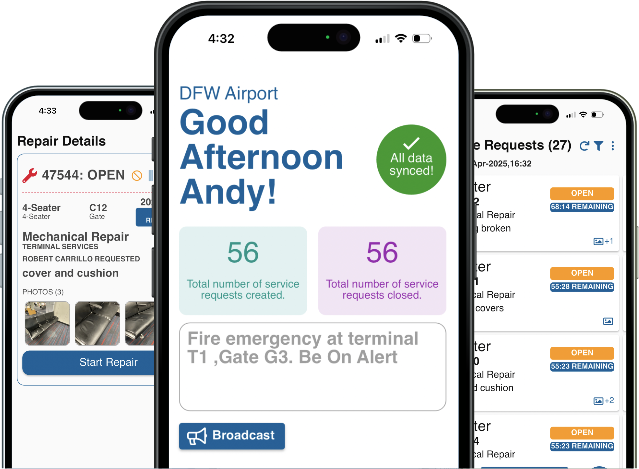
When someone reports a spill, how does that information reach the right person? Does someone know it was received, who was assigned and whether the work was completed? Does the person who reported it ever hear back?
And if a custodial employee is redirected to handle the spill, what happened to the work that employee was originally scheduled to complete? Was it finished later, reassigned or left outstanding? Without visibility into both sides of the workload, it’s difficult to know.
This becomes particularly important when the work is performed by an outside contractor. The scheduled cleaning may already be covered by the contract, while certain additional services carry separate call-out charges. Knowing what was requested, when it was requested, what was performed and when it was completed provides a much better basis for evaluating those charges.
It also helps answer a more basic operating question. Are unexpected needs being absorbed within the staffing already in place, or are they consistently creating more work than the existing resources can reasonably handle? Those are two very different situations, and they shouldn’t automatically lead to the same staffing or spending decision.
Over time, the information can tell us something about the original plan. Maybe certain restrooms need attention more frequently during peak periods. Maybe a particular area generates repeated spill requests, or the timing of scheduled cleaning needs to change to better match how the facility is being used.
The initial staffing calculation still matters. It establishes a reasonable starting point for the work we expect to perform and the resources we expect to need. But tracking what actually happens, both planned and unplanned, helps us make better use of those resources and understand when additional spending is warranted.
Other Resources



Ready to See ALINK™ In Action?
Discover how operational visibility can transform your facility’s performance.