Public Seating: The Asset That Nobody Owns
Public Seating: The Asset That Nobody Owns
Who really owns the gate seating?
Ask that question and you’re likely to get several different answers.
Facilities may say they maintain it. Airport Operations may say they report issues when they see them. Customer Experience wants it looking its best. Janitorial cleans it. Procurement bought it. The manufacturer built it and may even warranty it. The truth is, everyone touches it, but no one really owns it.
That isn’t unique to public seating. The same thing happens with charging stations, waste and recycling stations, tables, and many of the other assets passengers use every day. Let’s call these high-contact assets because they are used thousands of times every day and have a direct impact on the passenger experience. They sit between departments, and that’s often where the challenge begins.
Over the years, I’ve learned that when everyone shares responsibility, accountability has a way of becoming blurred. It isn’t because people don’t care. More often than not, it’s because the process was never built around that kind of asset.
To be clear, that’s not a failure of effort. The seat still gets cleaned. The repair still gets made. The purchase order is still cut. But today, getting there is a struggle and it’s a resource eater. A technician gets a report that something’s wrong with a chair at a gate. Not which chair. Not what’s wrong with it. So he walks the gate, finds it, discovers the armrest is broken, and has no parts with him because he didn’t know that’s what he’d find. Back to the shop. Twenty minutes. Track down the part, hope it’s in stock. Back out to the gate. Twenty minutes more. And because the same vague report may have come in two or three times before anyone got out there, he may be hunting for three broken armrests that were only ever one.
That’s not a lack of effort. It’s a lack of information.
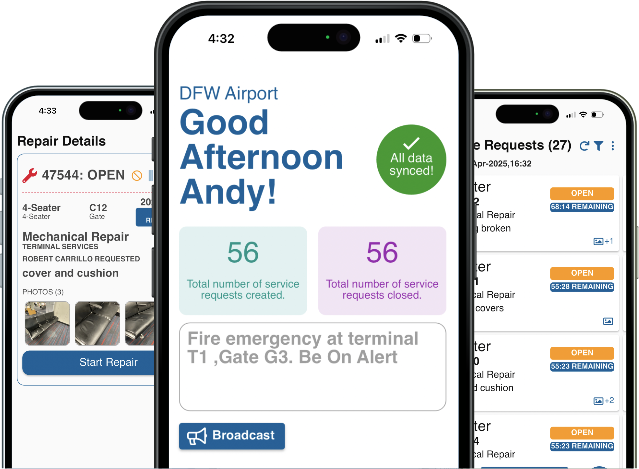
When someone reports a broken seat, the information starts moving from one group to another. Someone notices the issue. Someone takes the call. Someone sends an email. Someone decides who should respond. Eventually the work gets assigned, completed, and everyone moves on to the next issue until the next seat breaks.
Along the way, plenty of things can go wrong in that communication chain. But even when everything goes right, very little is learned. Was this the first time that chair failed, or the fourth? Has that model been creating problems across multiple gates? Is one terminal seeing more failures than another? How long did the repair actually take? Were the right parts available when they were needed? Did anyone follow up with the person who originally reported the issue?
Those answers are often much harder to find than the seat itself. You might be able to give a gut answer to some of those questions, but do you have the data to support it?
As airports continue to grow, so does the number of high-contact assets spread across terminals. Keeping those assets operating isn’t simply a maintenance challenge anymore. It’s an information challenge.
The airports that seem to manage these assets the best don’t necessarily have larger maintenance departments or bigger budgets. What they have is better visibility. Everyone involved is working from the same information. They know the condition of the asset. They know when it was last inspected and they know what repairs have been completed, what parts were used, and how often that asset has required attention over its life.
We started this discussion asking, “Who owns the seat?”
Maybe we should be asking, “Who owns the information about the seat?”
When information is collected and stays connected to an asset throughout its life, accountability becomes much clearer. Now you can begin measuring what really matters. Better short and long term decisions follow.
The janitor still has to clean it, the technician still has to fix it, and Procurement still has to replace it. But connect what each of them knows about that seat, and all three stop working in the dark. They all can see the full picture and they all become more efficient.
Ownership was never really the problem, the lack of information tied to that particular asset was.
Other Resources




Ready to See ALINK™ In Action?
Discover how operational visibility can transform your facility’s performance.