Why Asset Tracking Breaks Down at Scale in Airports
Why Asset Tracking Breaks Down at Scale in Airports
FORT WORTH, TX — April 23, 2026 — Every airport has a process for reporting maintenance issues. A passenger notices a broken seat. An airline employee spots a charging station that is not working. A customer service representative receives a complaint. Someone makes a phone call. An email gets sent. Eventually the issue reaches the maintenance team.
For years, that process has helped airports manage thousands of passenger facing assets. It works. But as airports grow larger and operations become more complex, the process itself begins to create challenges.
The issue is rarely reporting the problem. The issue is everything that happens after the report is made.
Has someone already reported it? Has the work been assigned? Is the right department responsible? Has the repair been completed? Has anyone followed up with the person who first identified the issue? If the same asset has been repaired three times in the past year, would anyone know?
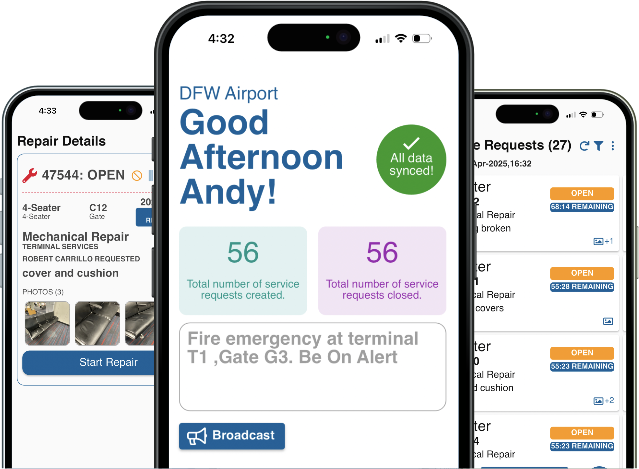
Without an overarching system specifically designed to manage thousands of individual customer facing assets and the work associated with them, organizations naturally rely on phone calls, emails, spreadsheets, and conversations between departments. Customer service sends an email to a communications center. The communications center forwards it to the appropriate maintenance group. A supervisor reviews it when time allows. Work is eventually assigned and completed, but somewhere along the way visibility into the process is lost. Each handoff creates another opportunity for information to be delayed, duplicated, or simply lost.
As a result, the people who reported the issue rarely know what happened. Customer service teams cannot always answer questions because they do not know the status of a repair. Managers struggle to identify recurring problems, and valuable operational information disappears with each handoff. Maintenance teams spend valuable time confirming information instead of solving problems.
The larger the operation becomes, the more difficult those communication gaps become to manage.
The goal is not simply to know where an asset is.
The goal is to understand what is happening with that asset from the moment an issue is identified until the work is complete.
When everyone involved is working from the same information, maintenance becomes more coordinated, communication improves, and recurring issues become easier to identify. People spend less time chasing information and more time improving the assets that shape the passenger experience.
Good asset management is not just about tracking assets. It is about connecting people, information, and action.
Other Resources



Ready to See ALINK™ In Action?
Discover how operational visibility can transform your facility’s performance.